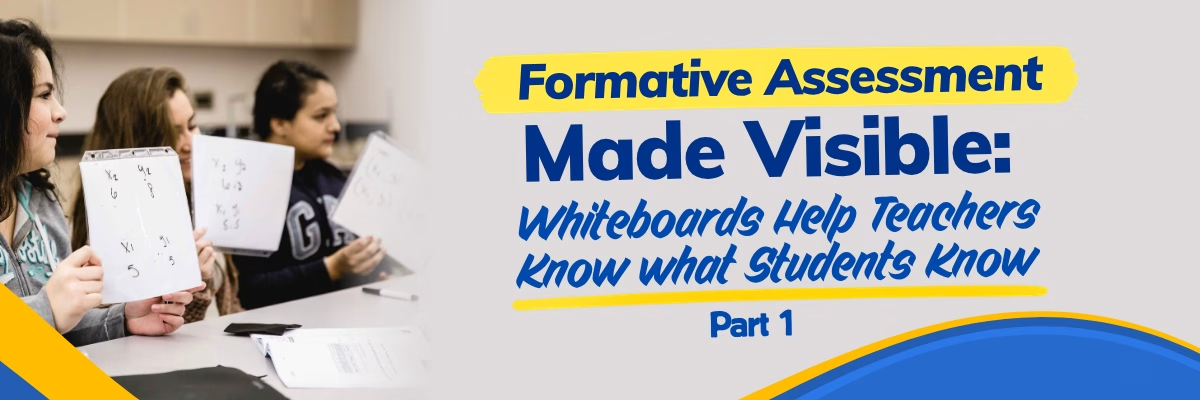
Formative assessments is one of the most powerful tools teachers can use during instruction. It helps teachers quickly determine what students understand, and what they need to practice, and what the teacher should do next.
Formative assessment isn’t just a quiz or test. It happens during the lesson through student responses, discussion, and checks for understanding.
Formative Assessment Is More Than a Quiz
A common misconception is that formative assessment has to be a formal assessment.
It doesn’t.
Formative assessment can include:
- Checking for understanding and listening to student responses
- Having students explain their thinking
- Using Pair-Share
- Asking students to solve a problem on a whiteboard
- Having students identify an example or non-example
- Asking students to summarize what they learned
The key is that the teacher uses the information to make an instructional decision.
If students don’t understand, the teacher adjusts instruction. If students demonstrate understanding, the teacher can move forward.
Why “Does Everyone Understand?” Isn’t Enough
Teachers can’t always tell whether students understand by simply asking, “Does everyone understand?”
Students may nod, remain quiet, or watch the teacher demonstrate a skill without actually being able to do it independently.
This is where Explicit Direct Instruction (EDI) and whiteboards can make a difference.

Whiteboards Make Student Thinking Visible
Consider a traditional classroom question:
“What is 3/4 + 1/4?”
The teacher asks the question. One student raises a hand and answers, “1.”
The teacher knows that one student knows the answer, but what about the other 25 students?
With whiteboards, every student solves the problem.
Students write their answers and hold up their boards.
Now the teacher can quickly scan the room and see:
- Students who have the correct answer
- Students who made a calculation error
- Students who may need additional modeling
The teacher has immediate evidence of learning.
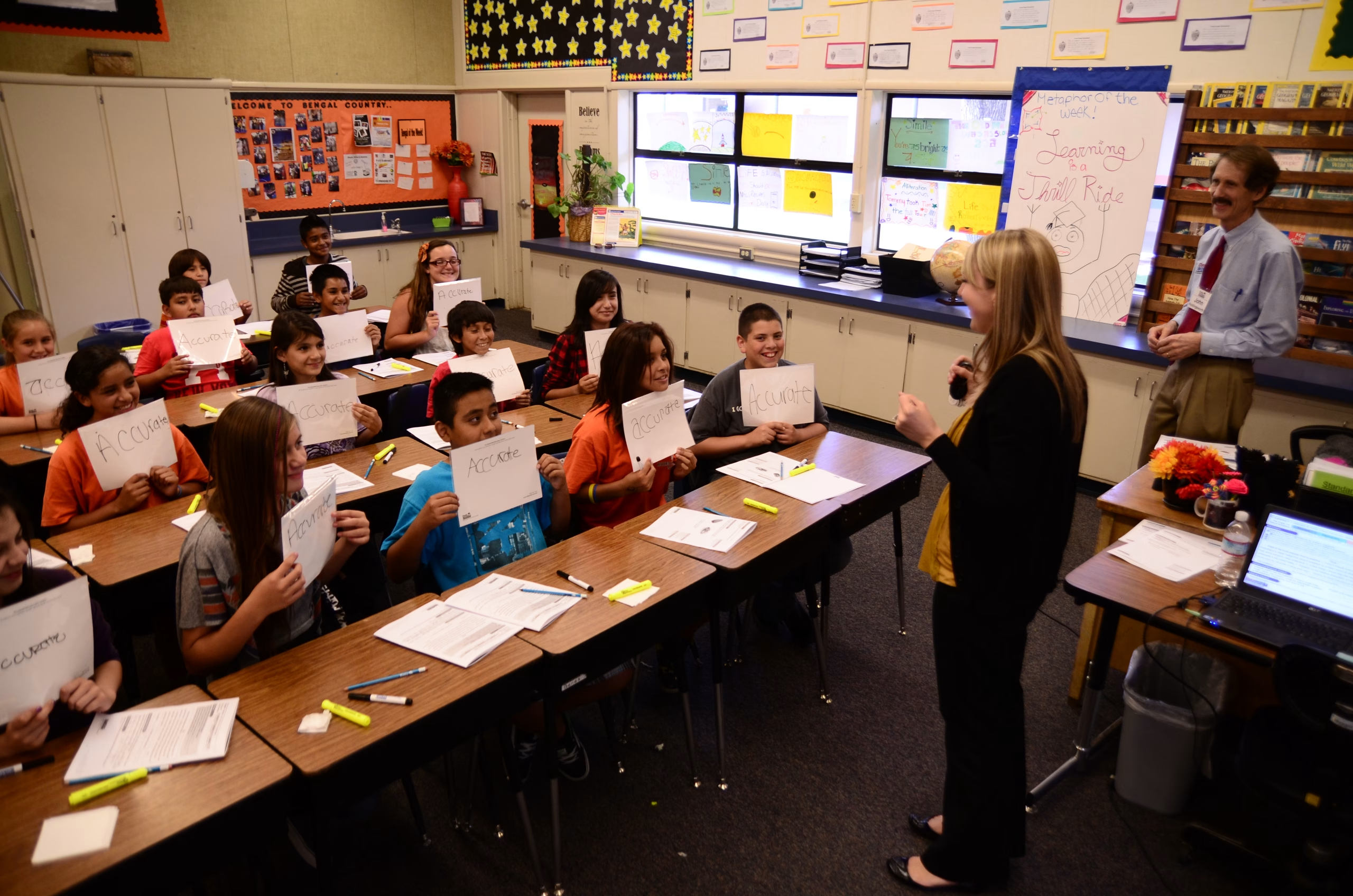
Whiteboards are especially useful because they allow every student to respond at the same time.
Make Every Student Accountable
Another advantage of whiteboards is that they increase student participation.
Instead of one student answering while everyone else watches, every student has to think, respond, and show their work.
This supports the EDI principle that students should be actively engaged throughout the lesson.
From Answers to Instructional Decisions
Whiteboards allow every student to respond at the same time, giving teachers a quick look at what students know and how they are thinking.
Instead of simply asking:
“What is 3/4 + 1/4?”
The teacher can say:
“What is 3/4 + 1/4? How do you know? Explain your thinking.”
Students solve the problem, show their work, and explain their thinking.
That final step, Explain, is critical. A correct answer doesn’t always mean a student understands the concept, and a wrong answer doesn’t always reveal the misconception. When students explain their thinking, teachers can identify the strategy students used, where their thinking went off track, and what they understand or misunderstand.
For example, two students may have the same incorrect answer but arrived at it for completely different reasons. Their explanations help the teacher determine the appropriate feedback or reteaching.
In just a few seconds, the teacher can gather information from every student and make an instructional decision:
Do I move on, provide feedback, or reteach?
The goal isn’t simply to see the answer.
The goal is to see the thinking behind the answer.
In Part 2, we’ll explore Bloom’s Taxonomy and how purposeful questioning, from quick checks to open-ended questions, can help teachers uncover what students really understand.

From “I Taught It” to “They Learned It”
One of the most important shifts in effective instruction is recognizing that teaching something does not guarantee that students learned it.
A teacher might think:
“I explained it clearly.”
But the more important question is:
“Can my students demonstrate it?”
Formative assessment helps teachers make that distinction.
EDI & whiteboards provide a simple, fast, and highly visible way to answer that question.