What are SWIPS observations?
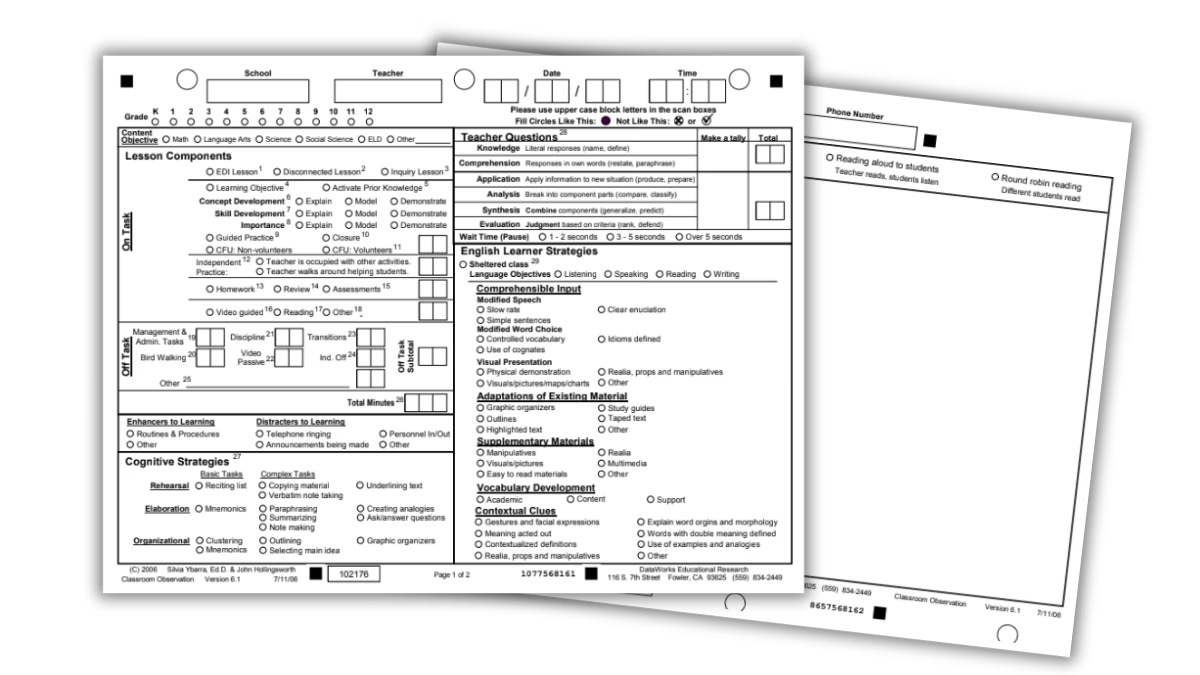
SWIPS (School-Wide Instructional Practices Survey) is a classroom observation process that help school and district leaders gather objective data about instructional practices across multiple classrooms. Rather than evaluating individual teachers, SWIPS identifies school-wide trends that can guide professional learning, instructional coaching, and school improvement efforts.
By observing classrooms using consistent criteria, leaders gain a clear picture of how lessons are designed, delivered, and experienced by students.
Looking Beyond Individual Classrooms
SWIPS observations focus on instructional practices that have the greatest impact on student learning. Observers collect evidence about lesson structure, student engagement, questioning techniques, Checking for Understanding, academic language, pacing, and opportunities for active participation.
This data helps schools move beyond assumptions and make decisions based on what is actually happening in classrooms.
Strengthening Lesson Design
Effective lessons begin with thoughtful planning. SWIPS data can reveal whether teachers consistently include essential lesson components, such as:
- Clear learning objectives
- Activating prior knowledge
- Well-defined concept development
- Frequent opportunities for students to demonstrate understanding
When observation data highlights missing or inconsistent practices, schools can provide targeted professional development where it is needed most.
Improving Lesson Delivery with Explicit Direct Instruction
Explicit Direct Instruction (EDI®) provides a research-based framework for delivering lessons that actively engage students and improve learning outcomes.
EDI emphasizes clear explanations, teacher modeling, structured questioning, and continuous Checking for Understanding through the TAPPLE process. Instead of waiting until the end of a lesson to discover misconceptions, teachers monitor learning throughout instruction and provide immediate feedback.
SWIPS observations help leaders measure how consistently these effective instructional practices are being implemented across classrooms.
Using Data to Guide Professional Learning
One of the greatest strengths of SWIPS is that it turns classroom observations into actionable data. Schools can identify instructional trends, prioritize coaching, and design professional development that addresses common needs rather than relying on assumptions.
As teachers refine both lesson design and delivery, students benefit from more engaging instruction, deeper understanding, and greater academic success.
Continuous Improvement
When SWIPS observations are paired with EDI, schools create a cycle of continuous improvement. Observation data identifies opportunities for growth, while EDI provides practical strategies teachers can immediately apply in the classroom.